Recognizing the Numerous Usages of Waste Tools in the Recycling Industry
The recycling sector relies greatly on specialized waste equipment to enhance handling and recovery. Each device, from shredders to balers, serves a distinctive purpose that boosts general effectiveness. Recognizing these duties is important for boosting sustainability efforts. Commercial garbage compaction equipment. As technology advances, new advancements emerge, assuring to transform conventional methods. This advancement raises essential questions about the future of waste administration and its influence on ecological preservation. What adjustments exist in advance for this essential sector?
The Role of Shredders in Product Handling
Shredders play an essential duty in the reusing sector by efficiently processing different sorts of waste materials. These makers are developed to reduce big things, such as plastics, steels, and organic waste, into smaller sized, workable pieces. This size decrease is important for succeeding recycling processes, as it enables less complicated handling and sorting. Along with promoting recycling, shredders improve safety and security by lessening the threat of injury related to managing cumbersome waste products.
Shredders contribute to environmental sustainability by making certain that products are processed in a method that takes full advantage of resource healing. They can handle a diverse series of materials, making them flexible devices in waste monitoring facilities. The efficient operation of shredders not just improves the reusing procedure yet also raises the general efficiency of waste diversion initiatives, promoting a circular economic climate. Their relevance in material processing can not be overemphasized, as they work as a fundamental step in the direction of lasting waste administration practices.
Exactly How Balers Enhance Efficiency in Waste Monitoring
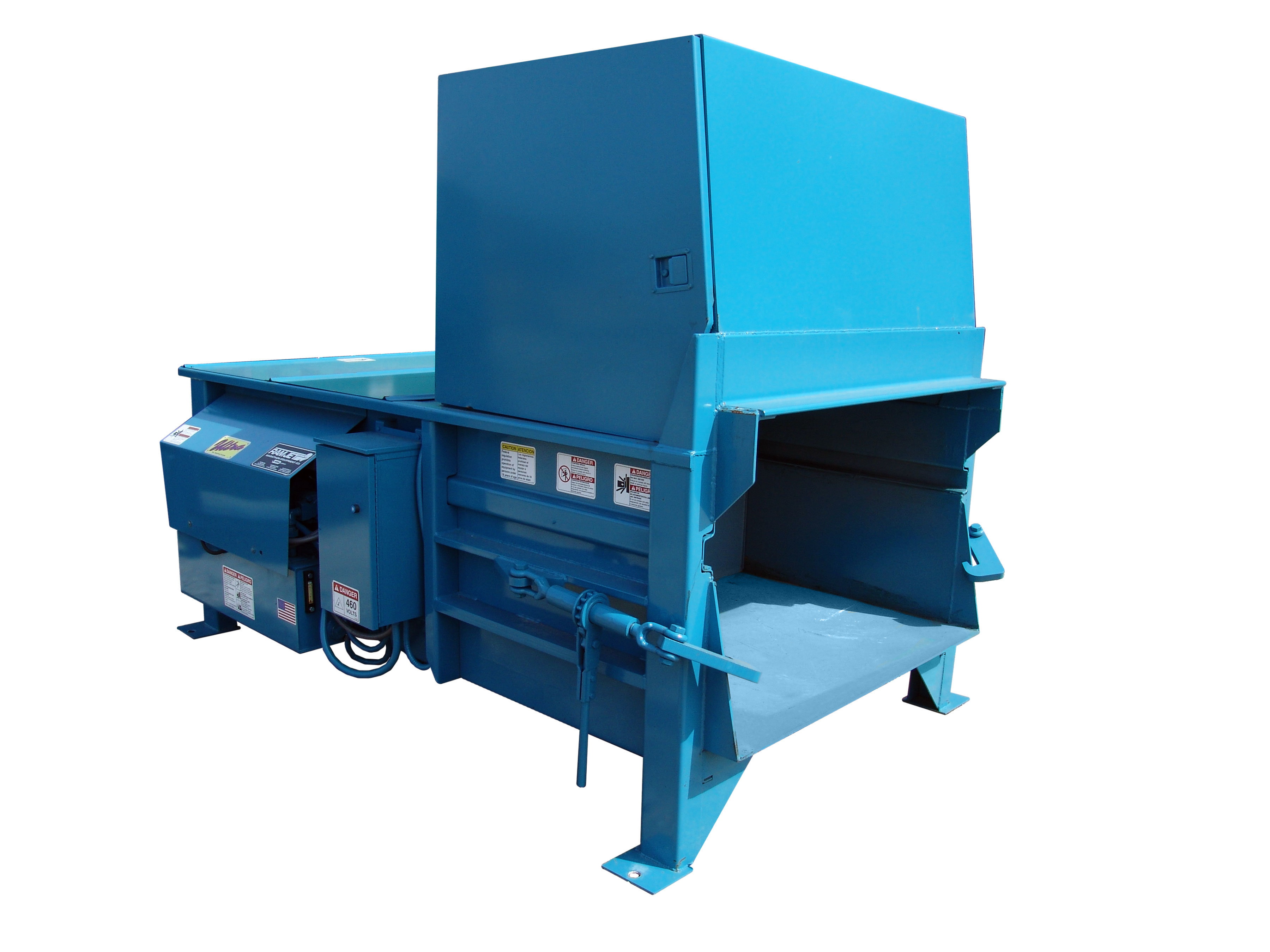
Balers considerably enhance effectiveness in waste management by condensing various products into bales, which simplifies storage and transport. By compressing recyclables such as cardboard, plastics, and metals, balers substantially minimize the volume of waste. This compression not only makes best use of area in recycling centers but likewise decreases the variety of trips called for to transport materials, resulting in reduced fuel prices and decreased ecological influence.
Additionally, balers add to improved safety and security in waste monitoring procedures. Portable bundles are much easier to deal with and pile, reducing the danger of mishaps linked with loose products. The uniform size of bundles permits for a lot more reliable packing and unloading procedures, simplifying operations within recycling centers. In addition, balers can boost the general quality of recyclables, as appropriately compacted products are less most likely to be polluted. In general, balers play a necessary function in optimizing waste monitoring techniques, promoting sustainability in the reusing market.
Conveyor Equipments: Simplifying the Recycling Refine
Integrating advanced equipment like balers significantly improves waste monitoring procedures, however the efficiency of the reusing process is even more boosted via making use of conveyor systems. These systems play an essential function in the seamless transport of materials within recycling centers. By promoting the movement of various waste kinds, conveyor systems minimize hand-operated handling and reduce the danger of contamination throughout the recycling procedure.
Moreover, conveyor systems can be customized to fit the special layouts and operational demands of recycling facilities. Their ability to run constantly enables a consistent circulation of materials, boosting productivity and making certain that processing and arranging equipment receives a regular supply.
Equipped with functions like adjustable speeds and automated controls, conveyor systems can optimize the flow of materials, significantly boosting overall performance (Commercial garbage compaction equipment). These systems are indispensable in modern-day recycling procedures, contributing and simplifying procedures to efficient waste management.
Arranging Equipments: The Trick to Product Healing
Arranging machines are crucial parts in the reusing sector, greatly enhancing the performance of product recuperation. These makers play a crucial duty in the separation of different recyclable products, enabling for a streamlined process that takes full advantage of resource removal. By making use of advanced modern technologies, such as optical sensing units and air classifiers, arranging devices can determine and categorize products based upon their dimension, make-up, and weight. This ability guarantees that steels, plastics, and paper items are properly separated, reducing contamination and improving the top quality of recycled outcome.
The operation of sorting machines considerably minimizes the reliance on hand-operated labor, which can be both vulnerable and lengthy to mistakes - Commercial garbage compaction equipment. Additionally, the automation supplied by these devices speeds up the total recycling process, bring about greater throughput and increased operational effectiveness. Subsequently, sorting machines are indispensable in accomplishing lasting waste monitoring objectives, enabling the recycling industry to efficiently recuperate important materials while decreasing garbage dump dependence
Developments in Waste Tools for a Sustainable Future
Current innovations in waste equipment are driving the reusing market towards an extra sustainable future. Developments such as automated sorting systems, which make use of expert system and artificial intelligence, enhance performance by accurately recognizing and dividing recyclables. This causes higher healing rates and decreased contamination. Furthermore, developments in compacting innovation permit for a lot more efficient transportation of materials, lessening carbon impacts during transit.
Developments in shredding tools enhance the handling of complex products, making it possible for the recycling of items that were once deemed non-recyclable. The combination of eco-friendly energy resources, like solar energy, in waste processing centers even more adds to sustainability goals. Furthermore, developments in waste-to-energy technologies and biodegradable products are improving the landscape of waste monitoring. Collectively, these advancements represent a transformative shift within the reusing market, promoting not only environmental security but additionally economic practicality for future generations.
Often Asked Concerns
What Types of Products Can Waste Devices Deal With?
The sorts of materials waste devices can deal with include plastics, steels, paper, glass, and natural waste. Each equipment go to this web-site kind is designed for specific materials, maximizing performance and efficiency in sorting and refining different waste streams.
Just How Commonly Should Waste Devices Be Preserved?
Are There Security Worry About Using Waste Equipment?
Safety and security worries with utilizing waste tools include possible injuries from mechanical breakdowns, exposure to dangerous materials, and poor training. Correct upkeep, regular examinations, More about the author and staff member education and learning are crucial to minimize these risks properly in any setup.
What Is the Typical Lifespan of Recycling Tools?
The typical life expectancy of reusing equipment usually varies from 10 to 20 years, depending upon factors such as usage intensity, maintenance methods, and technical improvements, which can significantly influence longevity and performance with time.
How Is Waste Equipment Powered in Recycling Facilities?
Waste equipment in reusing centers is commonly powered by electrical power, though some devices may make use of different power resources like gas or diesel. This power allows effective processing and change of materials for recycling functions.
Shredders play a critical role in the reusing sector by effectively processing numerous types of waste materials. They can handle a Extra resources diverse range of products, making them flexible tools in waste monitoring facilities. Balers substantially enhance efficiency in waste monitoring by compacting various materials into bundles, which streamlines storage and transport. The kinds of materials waste tools can take care of consist of plastics, steels, paper, glass, and natural waste. Safety and security concerns with making use of waste devices include prospective injuries from mechanical breakdowns, direct exposure to dangerous products, and inadequate training.